



Why Granite Outperforms Porcelain in Airport Terminals
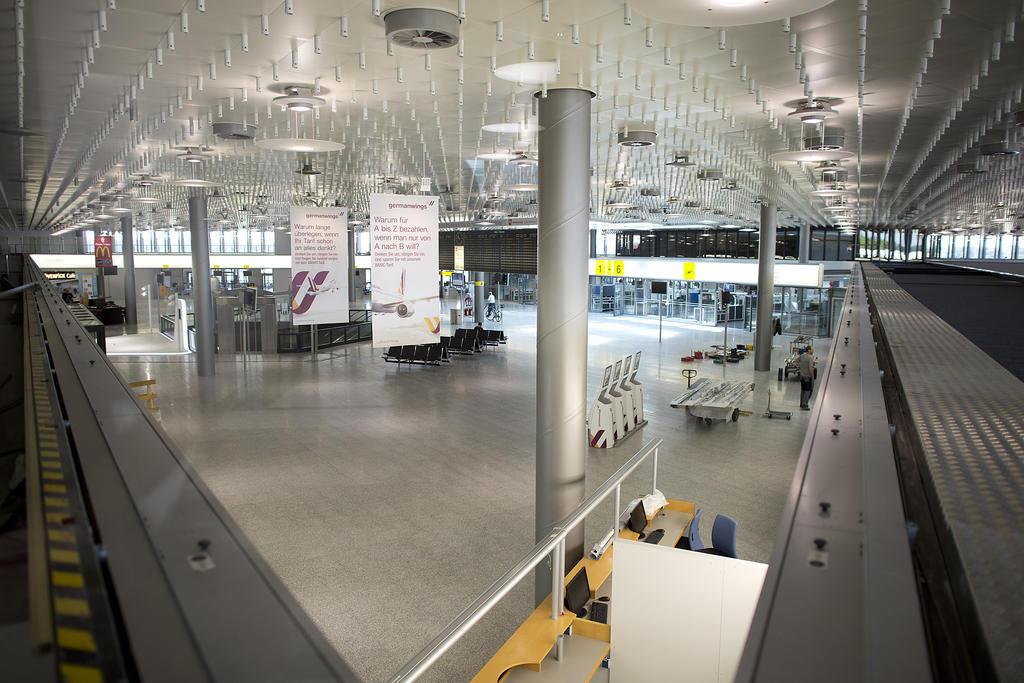
A technical perspective for architects and airport planners
In modern airport design, flooring is not just a finishing material — it is a long-term infrastructure decision.
Airport terminals operate under extreme conditions:
• Tens of millions of passengers per year
• Continuous rolling loads (luggage trolleys, pallet movers, cleaning machinery)
• Strict fire and safety regulations
• High aesthetic expectations
When specifying flooring materials, porcelain is often considered due to cost and design flexibility. However, in high-traffic international terminals, granite consistently outperforms porcelain in long-term performance, durability, and lifecycle value.
Here’s why.
1️⃣ Superior Mechanical Resistance
Airport floors endure:
-
Point loads from heavy equipment
-
Continuous rolling friction
-
Impact from luggage and maintenance tools
Granite, as a natural stone with high compressive strength and low porosity (when properly selected and processed), offers:
✔ Exceptional abrasion resistance
✔ Minimal surface wear over time
✔ High resistance to chipping under heavy impact
Porcelain tiles, especially large-format solutions, may achieve high technical ratings, but they are more vulnerable to edge chipping and surface wear in extreme transit zones.
In terminals operating 24/7, micro-damage accumulates fast.
Granite resists it better.
2️⃣ Lifecycle Cost vs Initial Cost
Porcelain may offer a lower initial supply cost.
But airport operators rarely think in 5-year cycles — they think in 25–40 years.
Granite flooring:
-
Maintains structural integrity for decades
-
Can be repolished or refinished
-
Does not lose surface integrity due to glaze wear
-
Ages naturally instead of deteriorating visibly
The result:
Lower long-term maintenance costs and fewer partial replacements.
In high-visibility public infrastructure, lifecycle value matters more than initial price.
3️⃣ Structural Stability in High-Traffic Areas
Large airport halls require:
-
Dimensional stability
-
Resistance to heavy rolling loads
-
Minimal long-term deformation
Granite slabs, when properly engineered and installed, provide outstanding structural reliability.
Porcelain, while technically advanced, can be more sensitive to subfloor imperfections and concentrated stress points, particularly in ultra-large formats.
For baggage halls, main circulation areas, and check-in zones, granite offers greater structural confidence.
4️⃣ Fire Performance & Safety
Airports operate under strict fire safety regulations.
Natural granite:
-
Is non-combustible
-
Emits no toxic fumes
-
Does not contain synthetic binders
-
Maintains integrity under high temperatures
Porcelain is also fire resistant, but granite’s mineral composition makes it inherently stable without additives or surface treatments.
For critical infrastructure, inherent performance is preferable to engineered resistance.
5️⃣ Aesthetic Permanence & Prestige
Airport terminals are architectural statements.
Granite offers:
-
Natural depth and authenticity
-
Timeless visual quality
-
Unique patterning
-
Strong perception of permanence and quality
Porcelain can imitate stone — but it cannot replicate natural geological variation.
In premium terminals, authenticity communicates strength, stability, and national identity.
6️⃣ Sustainability & Longevity
Sustainability in infrastructure is no longer optional.
Granite contributes to sustainability through:
-
Extreme longevity (decades of service life)
-
Low replacement frequency
-
Natural origin with minimal chemical processing
-
Recyclability at end of life
True sustainability in airports is not about marketing labels — it is about materials that last generations.
Final Thought for Specifiers
Porcelain has its place in commercial architecture.
But when it comes to:
✔ International terminals
✔ High passenger volumes
✔ Heavy rolling loads
✔ Long design life expectations
✔ Premium architectural standards
Granite remains one of the most reliable and performance-driven flooring solutions available.
At Eurobandas, we have supplied granite flooring for airport projects across Europe and North Africa, understanding the technical and operational demands these infrastructures require.
Because in airports, flooring is not decoration.
It is infrastructure.
- Eurobandas
- Noticias
- why granite outperforms porcelain in airport terminals